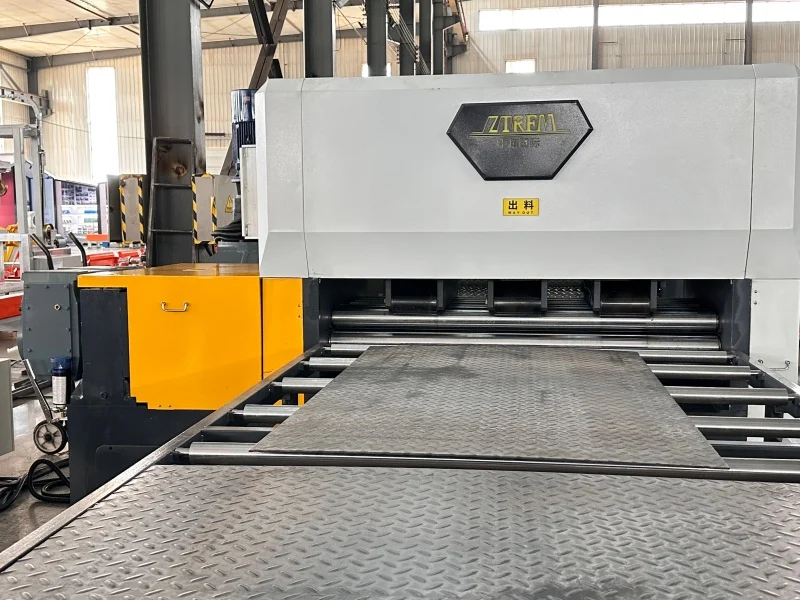
The Cut to Length and Embossing Production Line combines decoiling, embossing, leveling, precision cutting and automatic stacking into one continuous process. It turns Carbon steel (hot rolled steel sheet) into embossed sheets of preset length in a single pass — no secondary handling, no re-coiling, no manual feeding.
Sheet length, line speed and stroke counters are set on the PLC touch screen. The embossing unit can be lifted and bypassed, so the same line also runs plain cut-to-length sheets.
One line, two product ranges: flat cut-to-length sheet and embossed decorative sheet.
Working Process
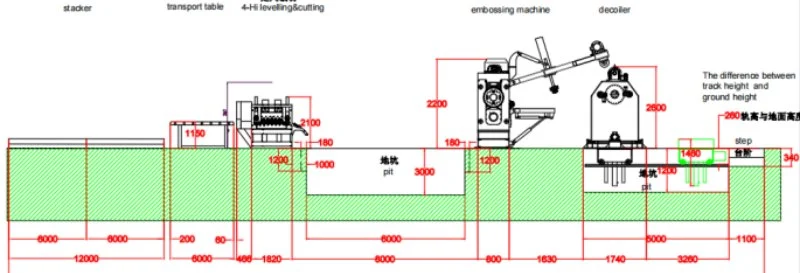
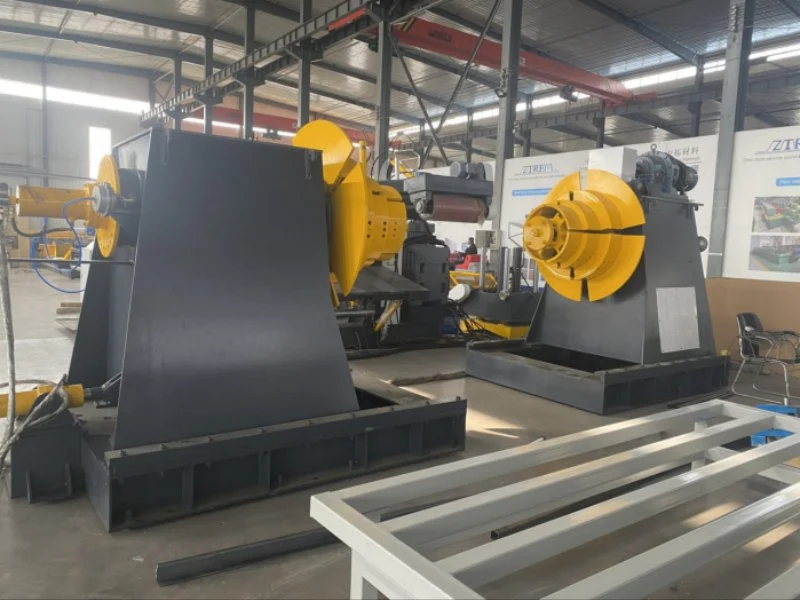
- Hydraulic decoiler — loads steel coil up to 25 t; ≤25 T, steel coil inner hole φ610-950 mm
- Embossing unit — hardened pattern rolls press the decorative texture across the full coil width. Pattern depth and roll pressure are adjusted by hydraulic/screw-down control.
- Leveling unit — placed after the embossing unit, the 4-hi/6-hi leveler straightens the strip and releases the deformation carried over from embossing, keeping sheets flat through cutting and stacking.
- Loop / tension control — buffers and stabilizes strip tension so the shear never pulls marks into the embossed surface.
- Cut to length shear — servo flying shear / stop-start shear cuts to the length set on the PLC, with an encoder-based length measurement system.
- Stacking unit — aligns and stacks finished sheets for direct packing, with automatic counting and pallet discharge.
Decoiler:
1.1. Unwinding frame: steel plate structure;
1.2. Unwinding form: magnetic powder dynamic unwinding;
1.3. Unwinding load: ≤25 T, steel coil inner hole φ610-950 mm;
1.4. Unwinding diameter: ≤1600 mm (raw material and finished product);
1.5. Unwinding width: 1300 mm
1.6. Host volume: length 3.5 meters, width 2.1 meters, height 1.9 meters
1.7. Main shaft for supporting materials: thick-walled seamless steel pipe is machined, and the shaft diameter is 245*60mm
1.8. Auxiliary support: hydraulic automatic support frame in front of the host
1.9. Hydraulic pump station: 6 solenoid valve pump station, power 7.5 kw, voltage customized.
1.10. Rated power of the main motor: 18.5 kw motor
1.11. Hydraulic cylinder: expansion cylinder bore diameter 160 mm, 1 piece
1.12. Electrical control system: using 22 kw inverter
1.13. Tightening method: inclined device tensioning: four supporting materials, wall supporting materials
1.14. Feeding width: 0-1300 mm
1.15. Inner diameter of steel coil: 610-950 mm
1.16. Rated load-bearing: 25 tons
1.17. Main engine plus hydraulic pressure arm, hydraulic support arm
- 25 tons unloading trolley parameters
2.1. Lifting and lowering of the trolley: double oil cylinder, bore 140 mm, stroke 300 mm
2.2. Car forward: 400 type hydraulic motor
2.3. Cart feeding: panel length: 1.2 meters, panel width: 900 mm
2.4. Car track: width: 1150 mm, length: 4000 mm
2.5. Car travel: height travel: 300 mm, length travel: 4000 mm
- Embossing machine
- Embossing roller material: 42Crmo
3.2. The thickness of the pressed material: 1.6-5mm
3.3. Width of pressed material: 1300mm
3.4. Speed: 3-6 m/min
3.5. Pattern: willow leaf pattern
3.6. Pressed material: carbon steel plate
3.7. Pattern depth: 1.2-1.5mm (pattern depth adjustable)
3.8. Embossing roll specification: ø500*1300mm
3.9. Roll structure: integral forging
3.10. Roll heat treatment: intermediate frequency quenching of the roll body
3.11. Roll hardness: HRC52-55
3.12. Roll pattern: According to the drawing requirements, CNC engraving
3.13. Rolling mill frame; steel plate composite structural parts
3.14. Rolling mill transmission; adopt frequency conversion speed regulation
3.15. Embossing method; reducer pressure regulation
3.16. Center height (between the ground and the two rollers): 750mm
3.17. Electric control part; independent control cabinet
3.18. Between the rolls: the gap can be adjusted
3.19. Flower roller: detachable and replaceable roller.
3.20. Cycloid reducer: 167R107-507-15-4
3.21. Frequency conversion motor power: 15KW/380V (50Hz)(or customize voltage)
3.22. Inverter brand: Zhongling
3.23. Three-phase asynchronous motor: Nanjing Shunbai Motor Co., Ltd.
3.24. Quantity: 1 set
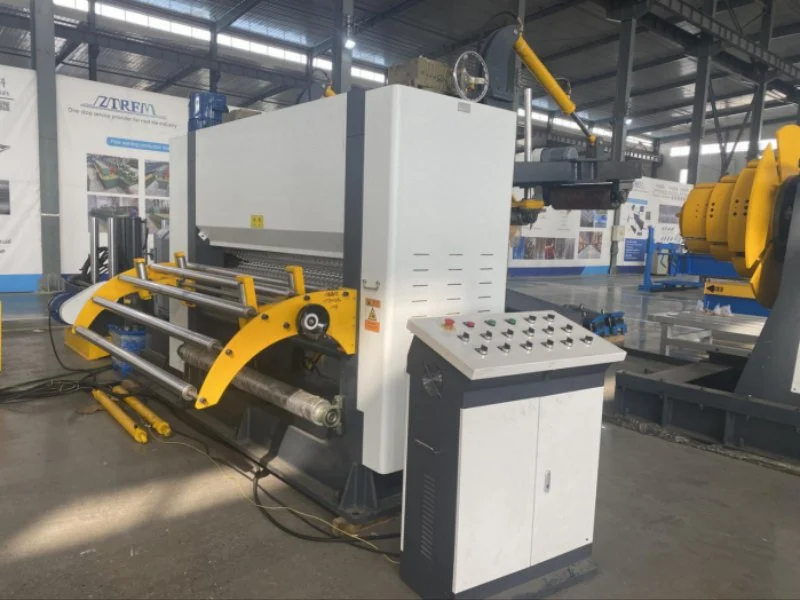
4.Leveler:
4.1Leveling roller material: forged steel, 45#
4.2 Leveling roller specification: ø150*1300
4.3 Number of rolls: 15 rolls
4.4 Leveling roller surface: chrome plating
4.5 Frequency conversion motor power: 15KW/415V
4.6 Leveling machine frame: steel plate structure
4.7 Quantity: 1 set
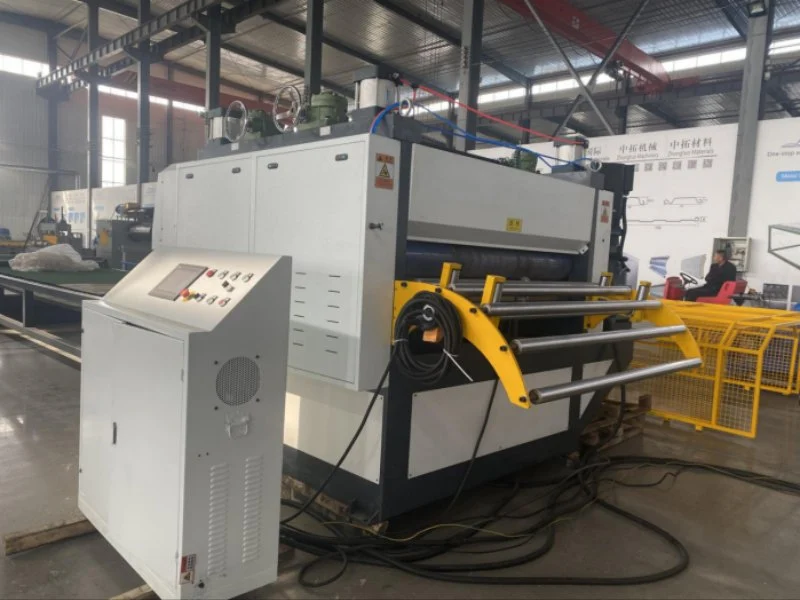
5.Conveyor:
5.1. Conveying large frame 100*100 square tube welding
5.2. Conveying width 1350*4000
5.3. Conveying motor: 1.5kw
5.4. Conveying plus positioning wheel, pressurized shaft
5.5. Conveying speed: 15-20 m/min (without embossing)
5.6 Conveyor length: 8m
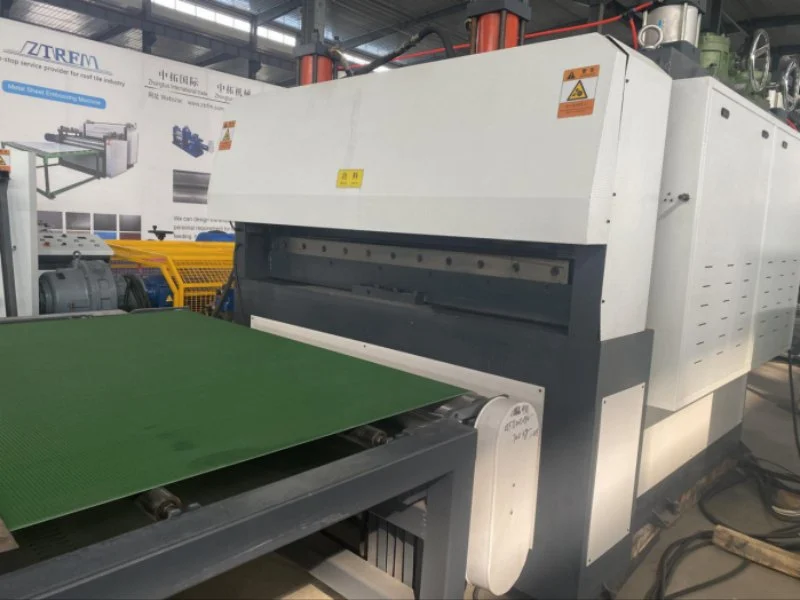
6.Stacker:
6.1. Large frame: 100*150*4.75mm square tube welding
6.2. Material width: 1.25 meters
6.3. Feeding length: 1-4 meters
6.4. Up and down stroke cylinder: 150*150, four
6.5. Feeding speed: 15-20 m/min (without embossing)
6.6. Load-bearing of the palletizer: it can bear 5 tons of plates
6.7. Material receiving method: platform type material receiving
7.Electric control operating system:
7.1 Touch screen 10 inches: Delta
7.2 PLC: Delta
7.3 Servo motor and driver: Delta
7.4 Chint Electric (contactors, relays, buttons, etc.)
7.5 After threading the board, it can be started with one button, and the whole line is automatically controlled
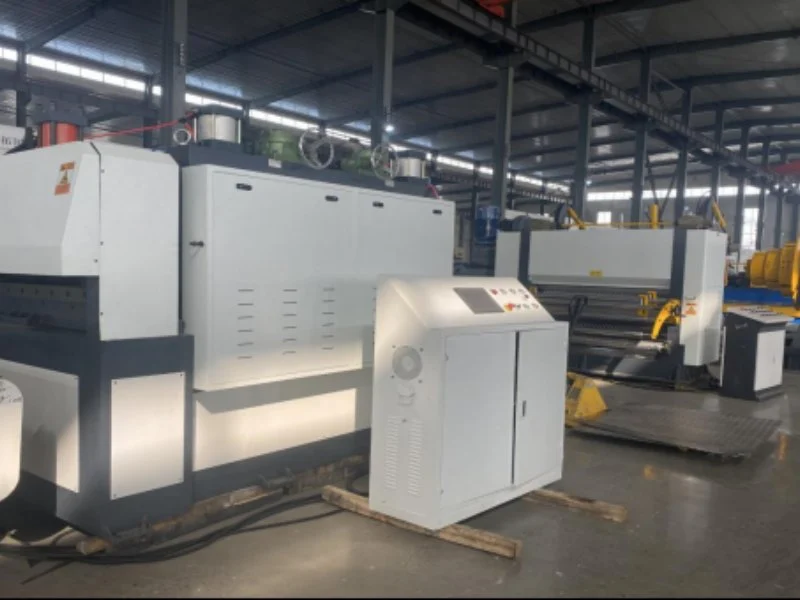
Why Buyers Choose This Line
- One-pass production. Coil in, finished embossed sheet out. Handling, re-coiling and double cutting steps are removed — lower labor cost and shorter order lead time.
- Dual output on one investment. Embossing rolls can be bypassed for plain cut-to-length work, so the line covers both flat sheet and decorative sheet orders instead of a single product.
- Consistent pattern, edge to edge. Hardened alloy steel, chrome-plated rolls with uniform hardness across the working width keep embossing depth stable from the first meter to the last.
- Tight length tolerance. Encoder + PLC closed-loop length control holds sheet length within ±1 mm, reducing material waste on high-value pre-painted coil.
- Surface protection as standard. Felt/urethane covered rollers, guide plates and protective film options prevent scratching on carbon .
- Stable at full speed. Stress-relieved welded steel frame, bearings, Delta PLC/inverter/servo drives; the line runs continuously at 3-6 m/min without speed-related pattern drift.
- Low maintenance, easy changeover. Quick-release roll sets, centralized lubrication points and a fault-diagnosis PLC cut downtime for pattern and size changes.
FAQ
Q1: Can one line produce both flat and embossed sheets?
-
Yes. The embossing unit can be lifted to a bypass position, and the line then runs as a standard cut-to-length line.
Q2: Which coil materials can it handle?
-
Carbon steel within the thickness 5.0 mm. Material hardness and yield strength should be confirmed before ordering.
Q3: Can you engrave a custom embossing pattern?
-
Yes. Send us a 200 × 200 mm sample or the pattern drawing, and we will confirm roll engraving feasibility, pattern depth and cost before production.
Q4: What is the delivery time?
-
45–60 days after receipt of deposit and confirmation of drawings. Coils and samples supplied by the customer affect the final schedule.
Q5: How is the machine shipped and installed?
-
2–4 × 40 HQ containers, standard export packing. One engineer accompanies installation if required; buyer provides local labor, crane and power connection.
Q6: Do you support OEM/ODM?
-
Yes — customized voltage, sheet length range, line speed, degree of automation and branding are all negotiable.

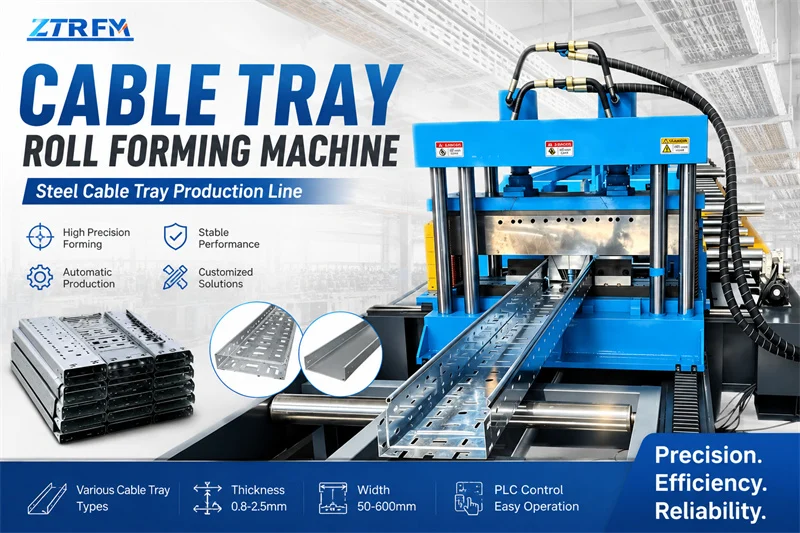
Modern electrical infrastructure requires reliable cable management systems to keep power cables, communication lines, and

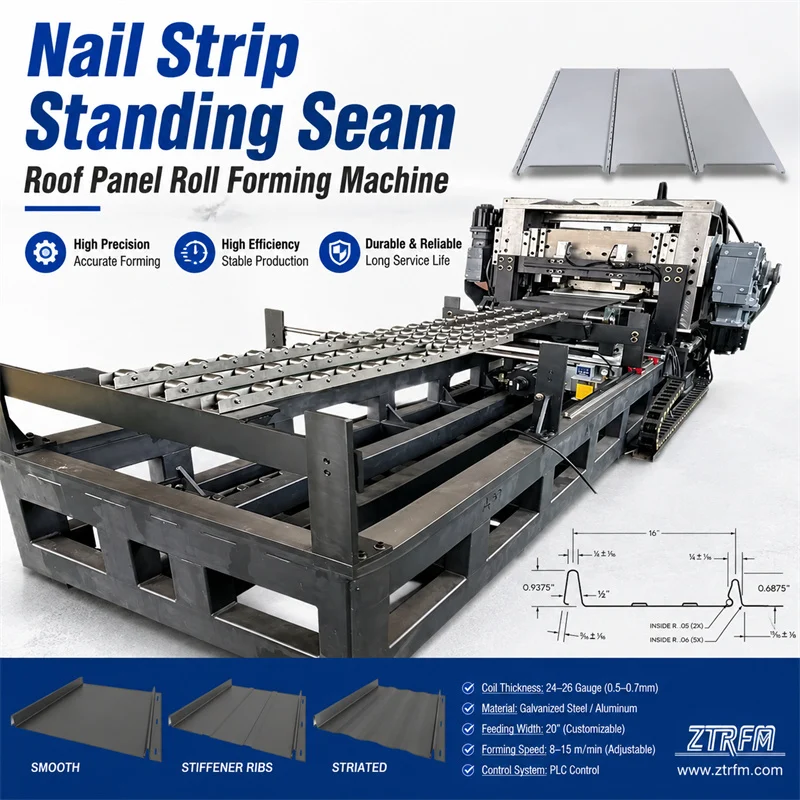
The Nail Strip Standing Seam Roof Panel Roll Forming Machine is an advanced manufacturing system
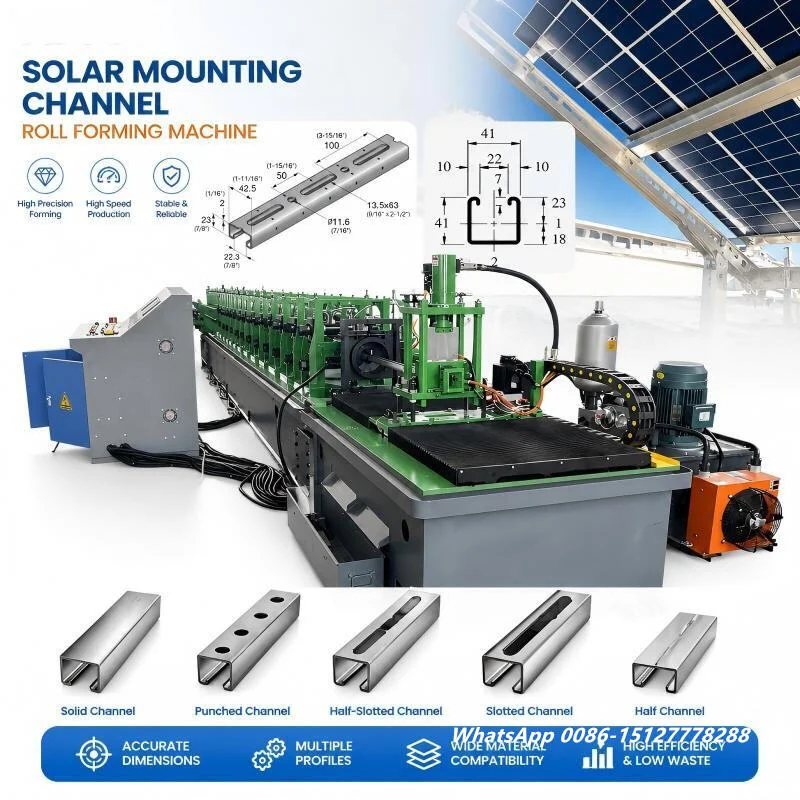
The rapid expansion of photovoltaic projects has created strong demand for reliable solar mounting structures.
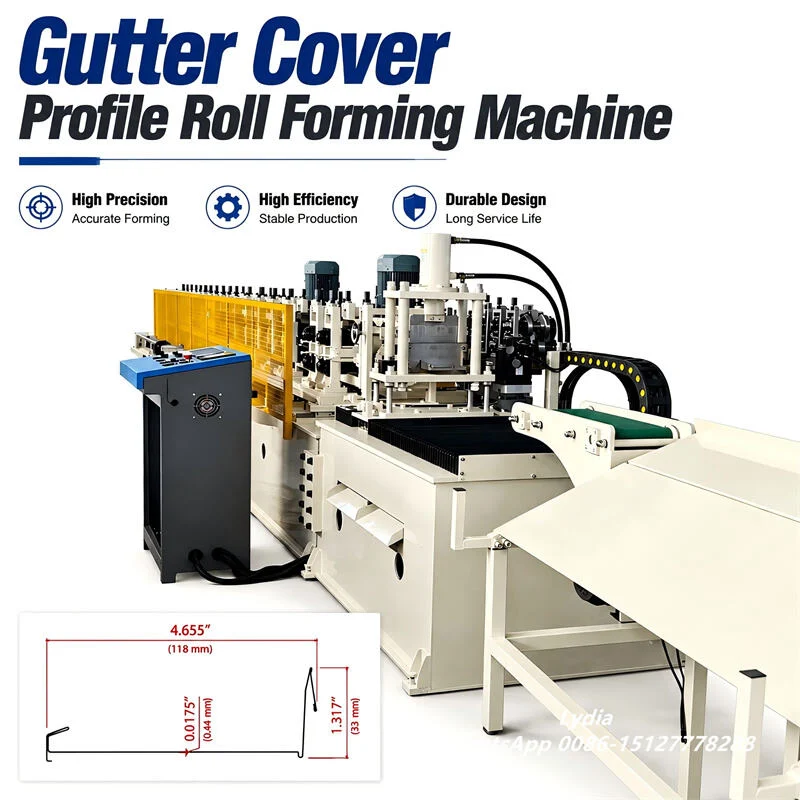
A dependable gutter drainage system needs to handle rainwater efficiently while keeping leaves and
Why choose us?
Global Trust: Trusted By Customers In Over 156+ Countries And Regions, Our Roofing Sheet Making Machines Are Recognized For Their Outstanding Performance And Reliability Worldwide.