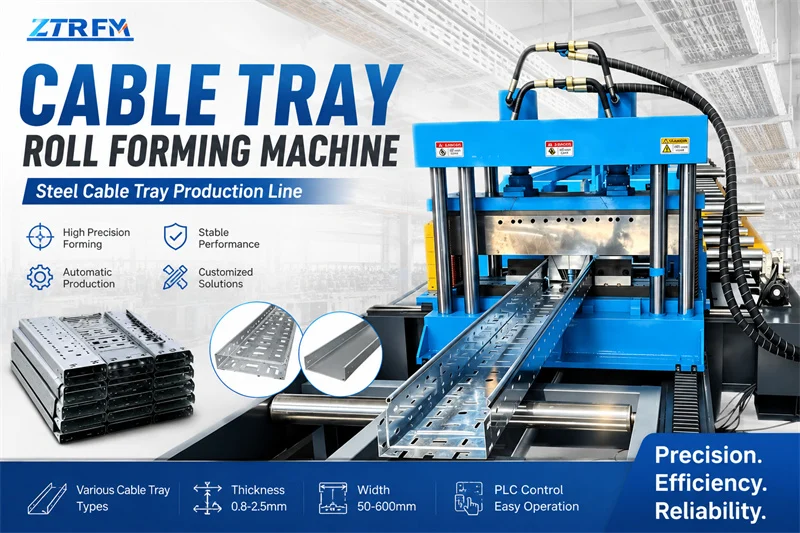
Modern electrical infrastructure requires reliable cable management systems to keep power cables, communication lines, and control wiring organized and protected. From factories and warehouses to data centers, solar power plants, and commercial buildings, cable trays provide an efficient way to support large quantities of electrical cables.
To meet this growing demand, manufacturers need a production method that combines high efficiency, dimensional accuracy, and flexible profile production.
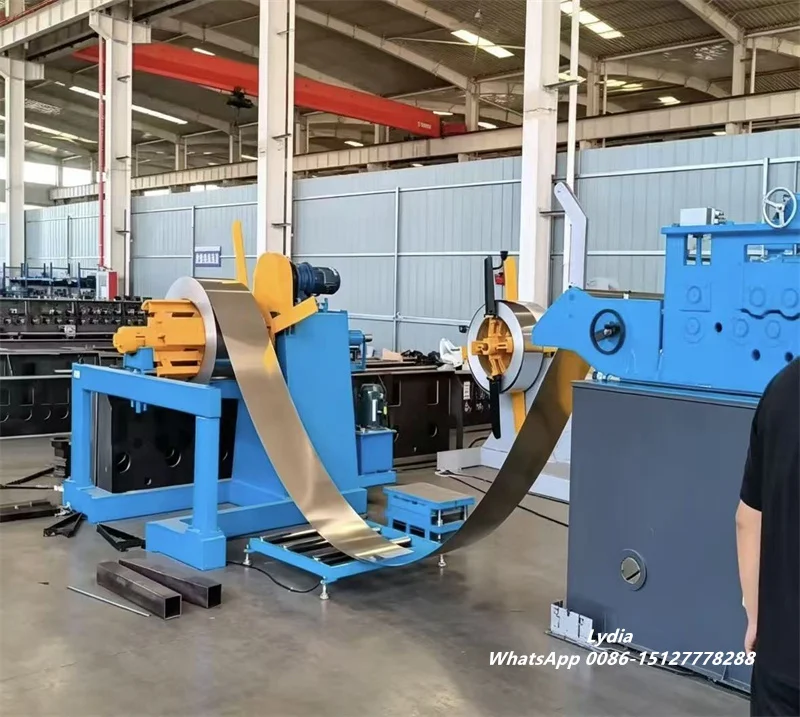
A Cable Tray Roll Forming Machine is an automated metal forming solution developed for manufacturing steel cable trays from continuous metal coils. By integrating decoiling, leveling, punching, roll forming, cutting, and product collection into one production line, this cable tray making machine can significantly simplify the manufacturing process.
Whether you need standard perforated trays, solid-bottom cable trays, ladder cable trays, or customized cable management profiles, a complete cable tray production machine can provide a stable and efficient solution for large-scale manufacturing.
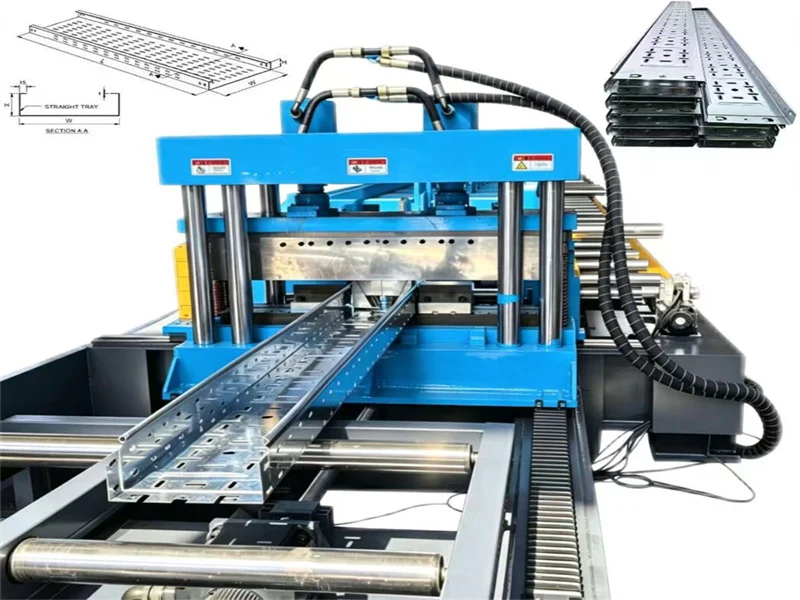
Cable Tray Roll Forming Machine for Steel Cable Tray Production
What Is a Cable Tray Roll Forming Machine?
A Cable Tray Roll Forming Machine is a continuous metal forming system designed to convert steel coils into finished cable tray profiles.
Unlike conventional fabrication methods that require separate cutting, punching, bending, and forming operations, a modern roll forming line combines multiple processes into a coordinated production workflow.
Depending on the cable tray design, the production line can include:
- Hydraulic or automatic decoiler
- Coil feeding system
- Leveling device
- Servo or hydraulic punching unit
- Roll forming section
- Hydraulic cutting system
- PLC control cabinet
- Hydraulic station
- Automatic output or stacking system
The metal strip passes through a series of precisely engineered rollers. Each forming station gradually bends the material until the required cable tray cross-section is achieved.
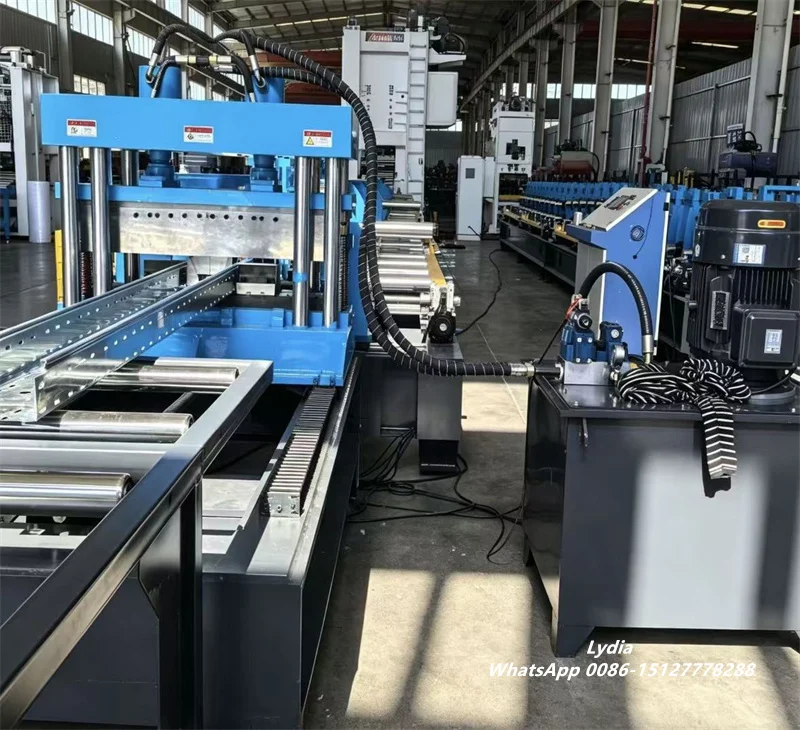
Cable Tray Punching Machine for Perforated Cable Tray Production
This continuous forming method provides stable dimensions and consistent quality throughout long production runs.
Why Is Demand for Cable Tray Making Machines Increasing?
Cable management has become increasingly important as electrical systems become more complex.
Large quantities of cables must be safely supported in industrial plants, commercial buildings, infrastructure projects, and energy facilities. Cable trays provide an organized installation method while making future cable inspection and maintenance easier.
The growing use of automation, renewable energy, telecommunications, and data infrastructure is also creating new demand for reliable cable management products.
Common applications include:
- Industrial factories
- Warehouses and logistics centers
- Commercial buildings
- Shopping malls
For manufacturers serving these markets, investing in a steel cable tray manufacturing machine can improve production capacity while reducing dependence on manual fabrication.
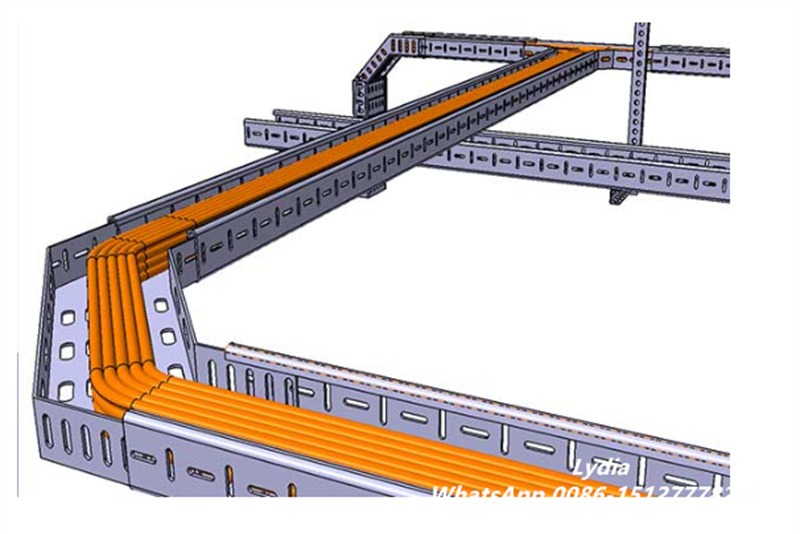
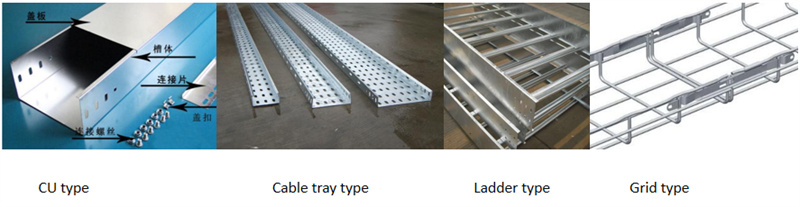
What Types of Cable Trays Can Be Produced?
One important advantage of a modern cable tray machine is its ability to accommodate different product designs.
With different roller tooling, punching patterns, and forming configurations, the production line can be engineered for various cable management applications.
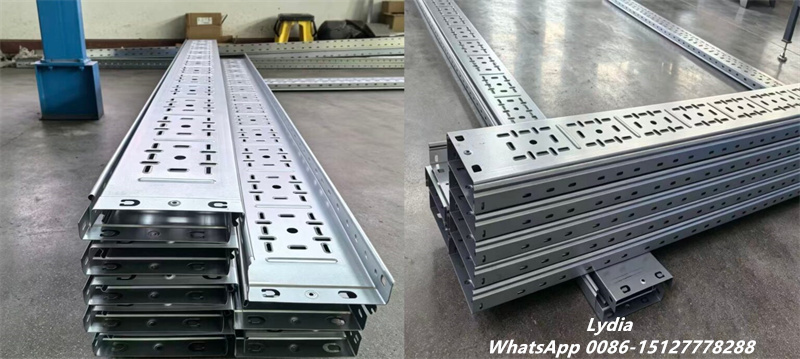
Perforated Cable Tray
Perforated cable trays feature holes or slots along the bottom and side sections. These openings can help with ventilation, cable fastening, and installation.
A dedicated cable tray punching machine can create customized hole patterns before or during the forming process.
Solid Bottom Cable Tray
Solid-bottom trays provide a continuous supporting surface for cables. They are commonly selected when additional cable protection or a closed supporting surface is required.
Ladder Cable Tray
Ladder cable trays use longitudinal side rails and transverse rungs. Their open structure makes them suitable for applications requiring ventilation and convenient cable installation.
A cable tray ladder making cold roll forming machine can manufacture the required ladder-style components efficiently.
Customized Cable Tray
Cable tray dimensions, hole patterns, side-wall heights, flange designs, and material thicknesses can vary according to project requirements.
Therefore, a customized cable tray forming machine can be developed according to the customer's finished profile drawing.
C100-600 Cable Tray Roll Forming Machine for Different Sizes
For manufacturers that need multiple cable tray dimensions, a C100-600 cable tray roll forming machine can be configured to cover a broad range of product sizes.
The exact dimensional range depends on the machine design and customer requirements, but the concept allows manufacturers to produce cable trays with different widths and side-wall configurations using appropriate tooling.
This is particularly useful for manufacturers serving different construction projects because one production system can be designed around multiple cable tray specifications.
Before selecting a machine, manufacturers should confirm:
- Cable tray width
- Side-wall height
- Material thickness
- Hole pattern
These parameters determine the forming structure, roller configuration, punching system, and cutting method.
Cable Tray Roll Forming Machine vs. Traditional Cable Tray Bending
Traditional cable tray production may involve several independent machines.
For example, a manufacturer may need separate equipment for:
- Cutting
- Punching
- Bending
- Forming
- Length cutting
- Manual handling
Although this method can work for small production volumes, it requires more labor and material handling.
A Cable Tray Roll Forming Machine integrates these processes into a continuous production line.
| Feature | Traditional Fabrication | Cable Tray Roll Forming Machine |
|---|---|---|
| Material Feeding | Manual | Automatic |
| Punching | Separate process | Integrated option |
| Forming | Individual bending | Continuous roll forming |
| Cutting | Manual/separate | Automatic |
| Labor Requirement | Higher | Lower |
| Production Speed | Relatively low | Continuous |
| Dimensional Consistency | Depends on operation | Stable |
| Large-Volume Production | Less efficient | Highly suitable |
As a result, roll forming technology is particularly attractive for manufacturers producing cable trays in large quantities.
Wire Mesh Cable Tray Machine for Open Cable Management Systems
Not every cable management project requires traditional solid or perforated trays.
Wire mesh cable tray systems are another popular solution, particularly where ventilation, visibility, and easy cable installation are important.
A wire mesh cable tray manufacturing machine is designed differently from a conventional sheet-metal cable tray roll former. Depending on the product design, production may involve wire straightening, cutting, bending, welding, and mesh forming processes.
A wire mesh cable tray welding machine can be used to join wire components into the required mesh structure.
Therefore, manufacturers should select the production equipment according to the final cable tray structure rather than using the same machine for every type of tray.
Zhongtuo Cable Tray Roll Forming Machine Steel Cable Tray Production L - cable tray06
Ladder Cable Tray Forming Machine for Industrial Applications
Ladder cable trays are widely used when large numbers of cables need to be supported while maintaining ventilation and easy access.
A ladder cable tray forming machine can be designed to manufacture the side rails or related ladder tray components according to the customer's profile drawings.
For complete ladder cable tray production, the manufacturing system may include:
- Side rail forming
- Rung production
- Punching
- Cutting
- Welding
- Automatic assembly
- Finished-product collection
For customers looking for a complete solution, a cable tray ladder making cold roll forming machine can be integrated with additional production equipment to create a more automated manufacturing workflow.
Main Advantages of an Automatic Cable Tray Making Machine
Why are more manufacturers choosing automated roll forming technology?
Higher Production Efficiency
Continuous coil feeding allows the machine to operate at a stable production speed without frequent manual loading and unloading.
Consistent Product Dimensions
The forming rollers are manufactured according to the required profile, helping maintain consistent tray width, height, and flange dimensions.
Reduced Labor Requirements
Once the production parameters are configured, the PLC-controlled system can automatically coordinate feeding, punching, forming, and cutting.
Flexible Product Configuration
Different roller tooling and punching programs can be designed for different cable tray profiles.
Lower Material Waste
Continuous forming makes efficient use of the steel coil and can reduce unnecessary material handling and processing losses.
Suitable for Large Orders
For manufacturers receiving regular orders from construction, electrical, and infrastructure projects, automated production can provide the capacity required for high-volume manufacturing.
Technical Specifications of a Steel Cable Tray Manufacturing Machine
The specifications of a steel cable tray manufacturing machine should be customized according to the finished product and production requirements.
| Item | Typical Specification |
|---|---|
| Machine Type | Cable Tray Roll Forming Machine |
| Suitable Material | GI, PPGI, Stainless Steel, Aluminum |
| Material Thickness | Approx. 0.8–2.5 mm |
| Cable Tray Width | Customized |
| Forming Stations | Approx. 24–32 Stations |
| Roller Material | Cr12 / 45# Steel |
| Shaft Diameter | Approx. 80–90 mm |
| Main Motor | Approx. 7.5–22 kW |
| Hydraulic Power | Approx. 5.5–11 kW |
| Cutting Method | Hydraulic / Servo Cutting |
| Control System | PLC Automatic Control |
| Production Speed | Approx. 15–30 m/min |
| Power Supply | Customized |
The final machine configuration should always be confirmed according to the customer's profile drawing, material thickness, punching requirements, and target production speed.
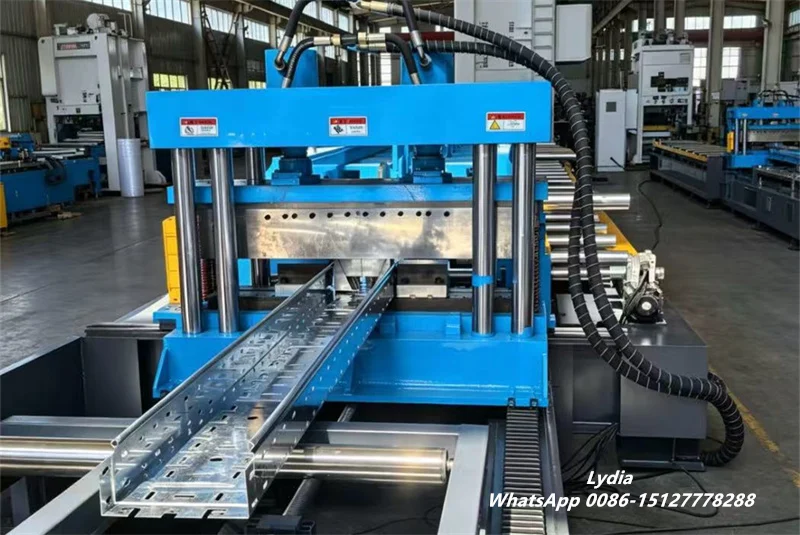
Automatic Cable Tray Roll Forming Production Line with Punching and Cutting
Start Your Cable Tray Manufacturing Business with Automated Production
As demand for reliable electrical cable management continues to grow, manufacturers need production equipment capable of delivering both efficiency and consistent quality.
A modern Cable Tray Roll Forming Machine provides an effective solution for producing steel cable trays continuously from metal coils. With automatic feeding, optional punching, progressive roll forming, hydraulic cutting, and finished-product collection, the production process becomes faster, more consistent, and easier to manage.
From standard perforated trays and solid-bottom trays to ladder cable trays and customized profiles, the right cable tray making machine can be configured around your product requirements.
If you are planning to establish a new cable tray production facility or upgrade an existing manufacturing line, send us your cable tray drawing, material thickness, tray width, and required production capacity. Our engineering team can recommend a suitable cable tray production machine and develop a complete production solution for your project.
Contact us today to discuss your cable tray manufacturing requirements and get a customized quotation.
Zhongtuo Nail Strip Standing Seam Roof Panel Roll Forming Machine Meta - 关于我们05women
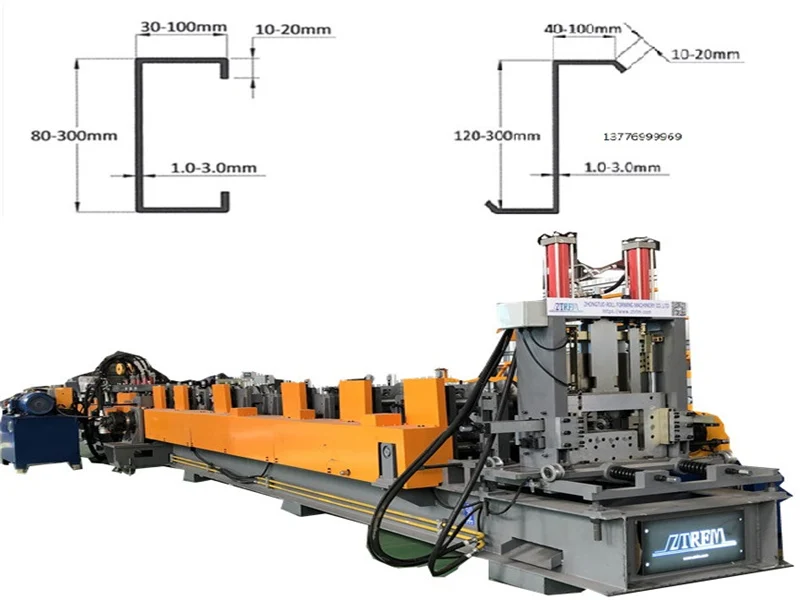
The CZ Purlin Roll Forming Line produces C and Z purlins from 1–3 mm steel
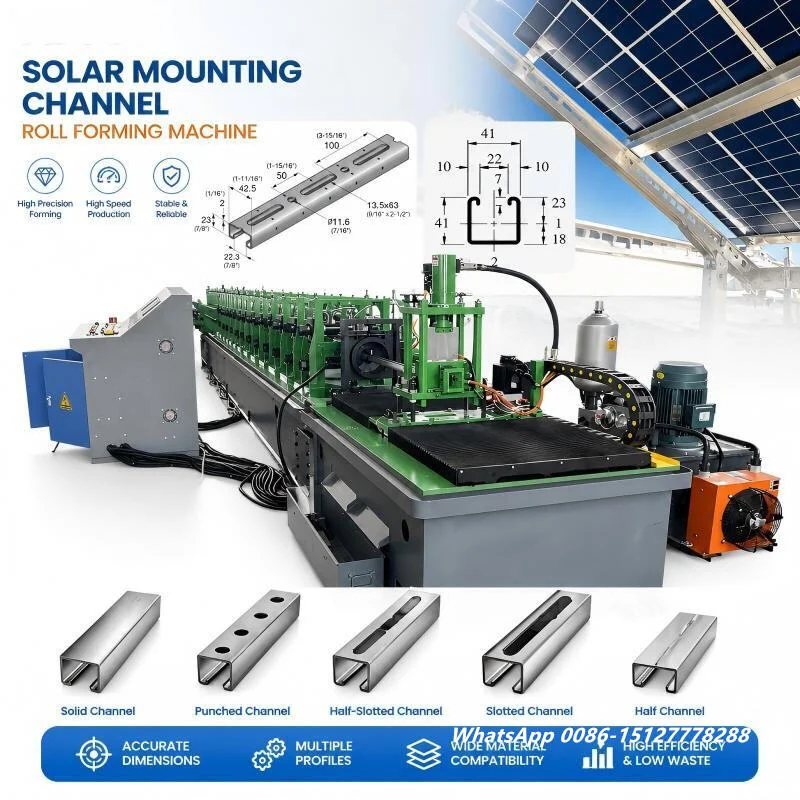
The Solar Mounting System Profile Production Line runs one profile family end to end —
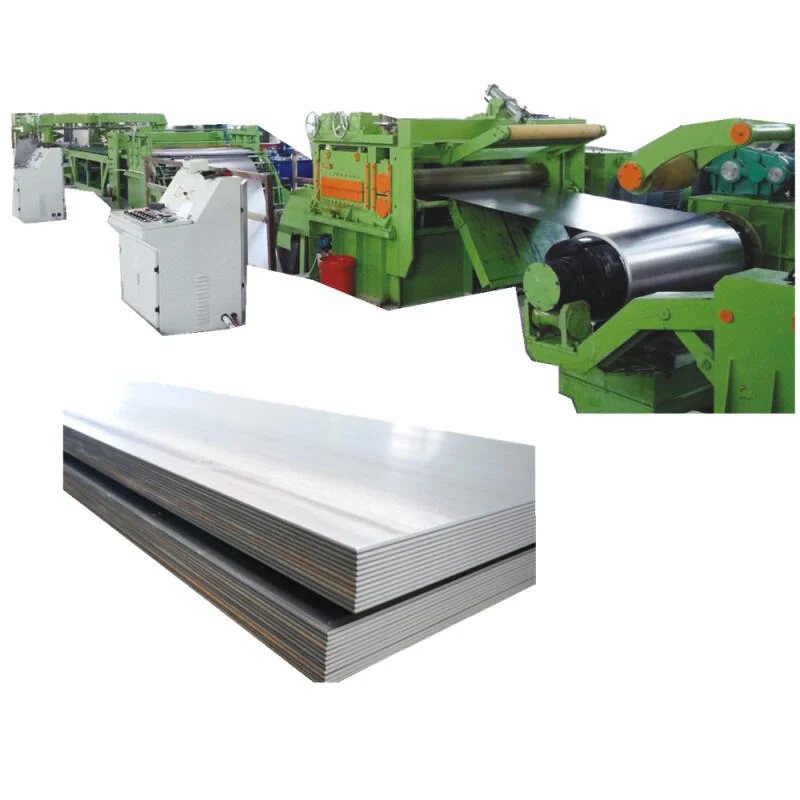
The ZT-3.2×1500 Automatic Cut to Length Line uncoils, straightens, cuts to length and stacks steel
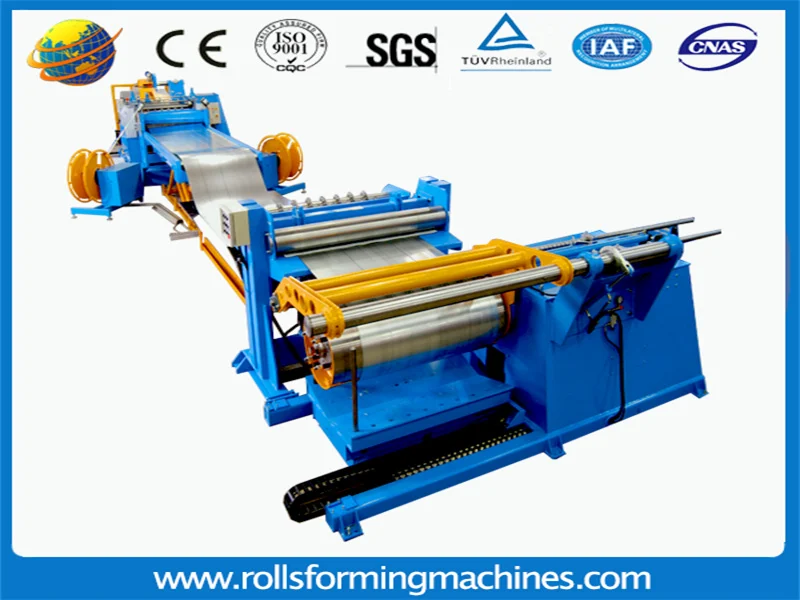
The ZT-4×1500 Hydraulic Slitting Line converts one master steel coil up to 15 t into
Why choose us?
Global Trust: Trusted By Customers In Over 156+ Countries And Regions, Our Roofing Sheet Making Machines Are Recognized For Their Outstanding Performance And Reliability Worldwide.